If you’ve made the switch to sand in your chicken coop or run, you already know why it’s so popular. It acts like giant kitty litter for your flock: it drains standing water instantly, keeps feet dry, doesn’t rot, and makes daily poop-scooping surprisingly quick.
However, sand isn’t a completely “set-it-and-forget-it” substrate. Without a routine maintenance plan, it can compact, develop odors, or track dampness into the coop.
Here is everything you need to know about taking care of sand in your coop and run, keeping it fresh year-round, and protecting your budget along the way.
1. Choosing the Right Sand (And What to Avoid)
Proper sand maintenance starts with using the correct type from day one. Using the wrong sand creates unnecessary labor and health hazards for your flock.
- Use Construction Grade / Coarse River Sand: This is the gold standard for chicken coops and runs. It contains a mix of grain sizes, small pebbles, and coarse grit. It drains exceptionally well, provides natural crop grit for your hens, and doesn’t compact into solid concrete.
- AVOID Play Sand or Builder’s Sand: Play sand is washed and crushed fine. It contains high amounts of silica dust, which causes severe respiratory issues in poultry when kicked up. Fine sand also retains moisture and turns into slick, sticky mud when wet.
2. The Daily & Weekly Scoop Routine
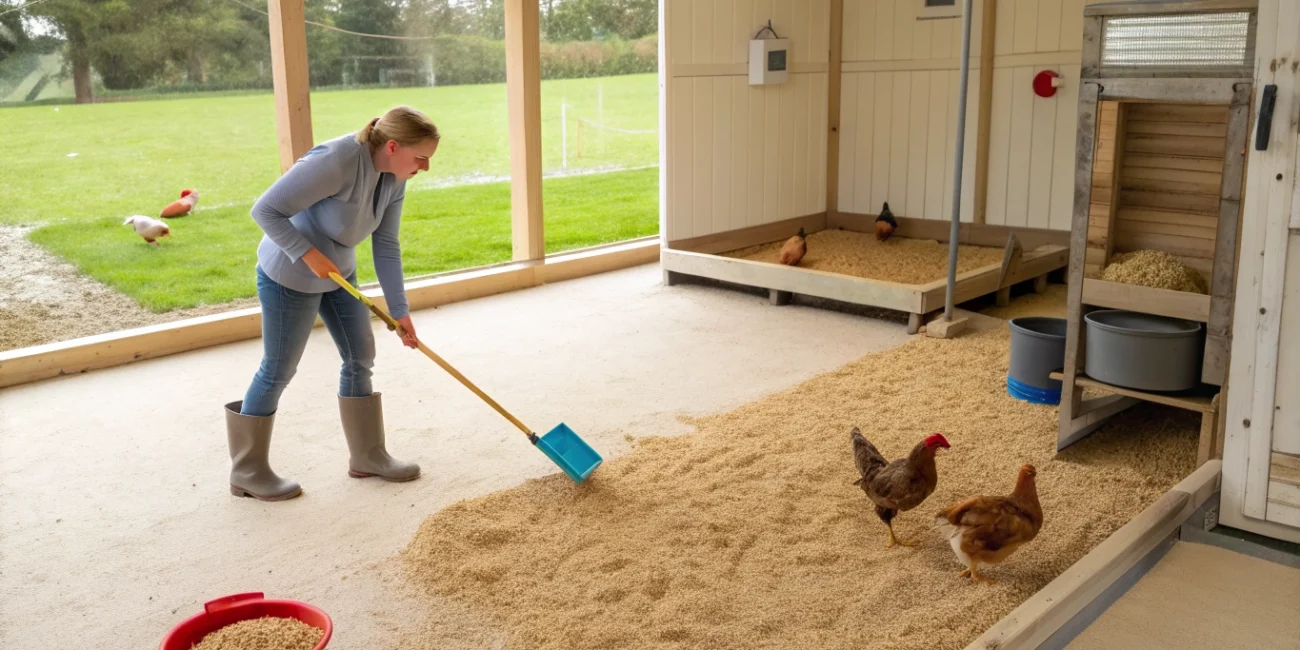
The secret to making sand last for years without replacement is consistent spot-cleaning. Because droppings sit right on top of the coarse grains rather than soaking in, cleaning takes only a few minutes.
- The Right Tool for the Job: Invest in a long-handled cat litter scoop, a modified stall rake with wire mesh attached, or a deep-basket garden sifter.
- Spot-Scoop High-Traffic Areas: Focus your daily or bi-weekly scooping directly under the roost bars inside the coop and around the feeder/waterer stations in the run.
- Sift and Toss: Sift the clean sand back onto the floor and deposit the manure directly into your garden compost pile.
3. Managing Odors Naturally
While sand naturally dries out droppings faster than wood shavings or straw, humidity and heavy rainfall can lead to lingering ammonia odors—especially inside enclosed coops.
- Apply Sweet PDZ or Agricultural Lime: Sprinkle a light layer of powdered or granulated Sweet PDZ (stall refresher) or non-caustic agricultural lime over high-moisture spots after scooping. This neutralizes ammonia on contact without harming your birds’ feet or lungs.
- Incorporate Food-Grade Diatomaceous Earth (DE) Sparingly: A light dusting of food-grade DE in dry run areas helps absorb moisture and deters mites and flies. Always dust close to the ground when birds are out of the coop to prevent airborne dust inhalation.
4. Seasonal Refresh & Moisture Control
Over time, heavy rainfall and daily flock activity can cause sand to settle or shift. Here is how to manage it across seasons:
Deep-Rake & Aerate
Once a month, use a heavy iron garden rake to turn over the top 2 to 3 inches of sand. Aerating prevents compaction, breaks up any crusting from dried organic matter, and brings fresh, dry sand to the surface.
Manage Run Drainage
If your run sand stays wet after heavy rain, check your perimeter drainage. Sand must sit on a well-draining base (such as gravel or elevated ground). Adding clear vinyl tarps or roof overhangs over the run keeps driving rain off the sand entirely, keeping your maintenance work minimal.
Top-Offs
Sand doesn’t decompose, but small amounts leave the run on your boots or in the sifter bucket. Plan to top off your coop or run with a fresh bag or wheelbarrow load of coarse river sand once or twice a year to maintain a healthy 3- to 4-inch depth.
Summary Checklist for Sand Maintenance
| Task | Frequency | Main Focus |
| Spot-Scoop Droppings | 2–3 times per week | Under roost bars and feeding areas |
| Aerate & Deep Rake | Monthly | Turn top 3 inches to prevent compaction |
| Odor Control | As needed | Apply Sweet PDZ to damp spots |
| Substrate Top-Off | 1–2 times per year | Add fresh coarse sand to maintain 4″ depth |
👇 WE WANT TO HEAR FROM YOU!
Are you currently using sand in your coop or run, or are you thinking about making the switch from wood shavings? Drop your questions or favorite cleaning tools in the comments below! 💬