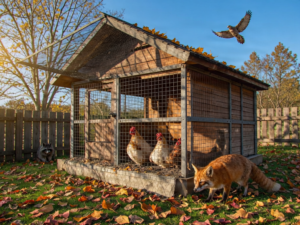
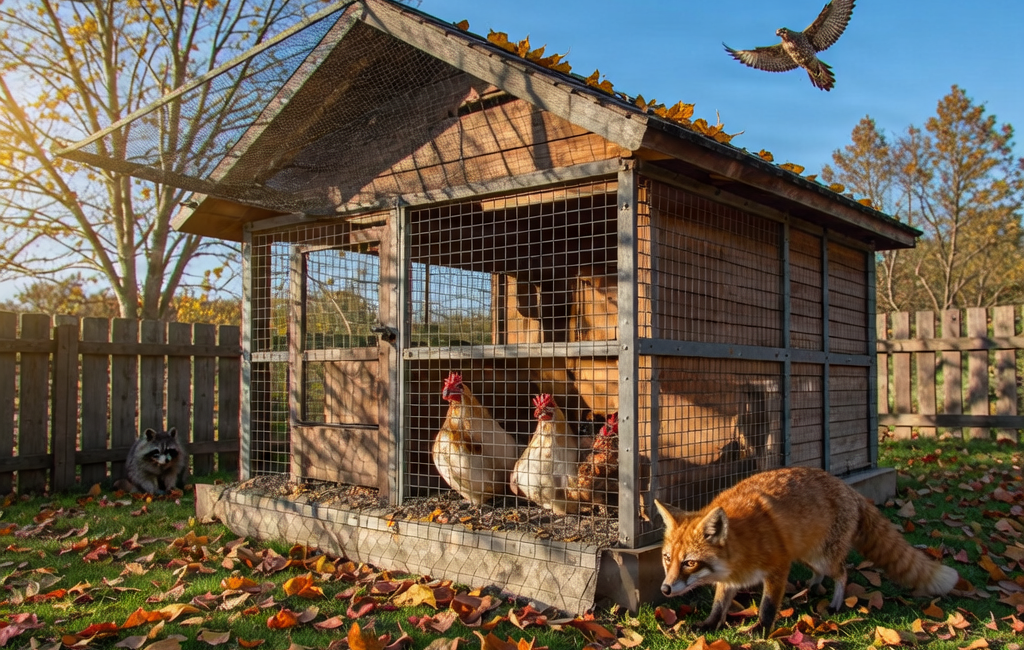
As autumn leaves begin to drop and morning temperatures dip, backyard chicken keepers face a subtle but serious seasonal threat: the pre-winter predator rush.
During autumn, wild predators like foxes, raccoons, coyotes, and hawks experience a biological drive to fatten up for winter. To make matters worse, hungry young predators born in spring are now hunting independently, and falling leaves eliminate natural tree-canopy cover.
Here is everything you need to know about autumn predator behavior, reinforcing your coop perimeters, and securing your flock against aerial and ground threats this season.
1. Why Autumn Increases Predator Attacks
Autumn changes wildlife dynamics around your property in three major ways:
- The Pre-Winter Calories Drive: Mammals like raccoons, opossums, and foxes need extra calories to build fat reserves before snow covers their primary food sources (frogs, insects, and berries).
- Juvenile Predators On the Hunt: Kits and pups born in spring are now fully grown, learning to hunt on their own, and eager to find easy targets like backyard chicken coops.
- Loss of Tree Canopy Cover: As deciduous trees drop their leaves, hawks and owls gain clear line-of-sight views straight into previously sheltered chicken runs.
2. Securing the Ground Perimeter Against Diggers & Prying Paws
As soil softens with autumn rain, digging predators take advantage of loose ground around run perimeters.
- Install a Hardware Cloth Apron: Standard chicken wire only keeps chickens in; raccoons can tear through it, and dogs or coyotes can bite through it. Line the bottom 3 feet of your coop and run with 1/2-inch welded hardware cloth. Extend a 12- to 18-inch “apron” flat along the ground outward from the run walls and pin it down with landscape staples. Grass will grow over it, while preventing digging foxes and coyotes in their tracks.
- Upgrade Coop Latches: Raccoons have nimble hands that easily open simple hook-and-eye latches or slide bolts. Upgrade all doors and nesting box lids to 2-step carabiner clips or heavy-duty spring-loaded latches.
3. Shorter Days & Automatic Door Protection
Shorter autumn days catch many flock owners off guard. It gets dark rapidly between 5:00 PM and 6:30 PM, often before you return home from work or evening errands.
- Prevent Dusk Ambushes: Most ground predators begin hunting right at dusk. Leaving your coop open for even 15 minutes after twilight creates an easy target.
- Automate Your Door Schedule: Upgrading to a light-sensing or timer-based automatic coop door ensures your girls are safely sealed inside their roost the second natural light fades, giving you complete peace of mind.
4. Defending Against Aerial Hawks & Owls
With autumn leaf drop, hawks lose their camouflage but gain a clear view of your flock from above.
- Install Overhead Run Netting: Cover open-air runs with heavy-duty woven poultry netting or aviator netting. Ensure it is tightly anchored so heavy hawks cannot collapse the barrier.
- Provide Cover Objects in the Run: If your chickens free-range in the yard, place temporary shelter structures—such as lean-to wooden boards, low pallet tables, or mobile chicken tractors—so hens can quickly dive under cover when an alarm call sounds.
👇 WE WANT TO HEAR FROM YOU!
Have you noticed more hawk activity or nocturnal visitors around your coop this fall? How do you secure your run perimeter when the seasons change? Tell us in the comments below! 💬👇