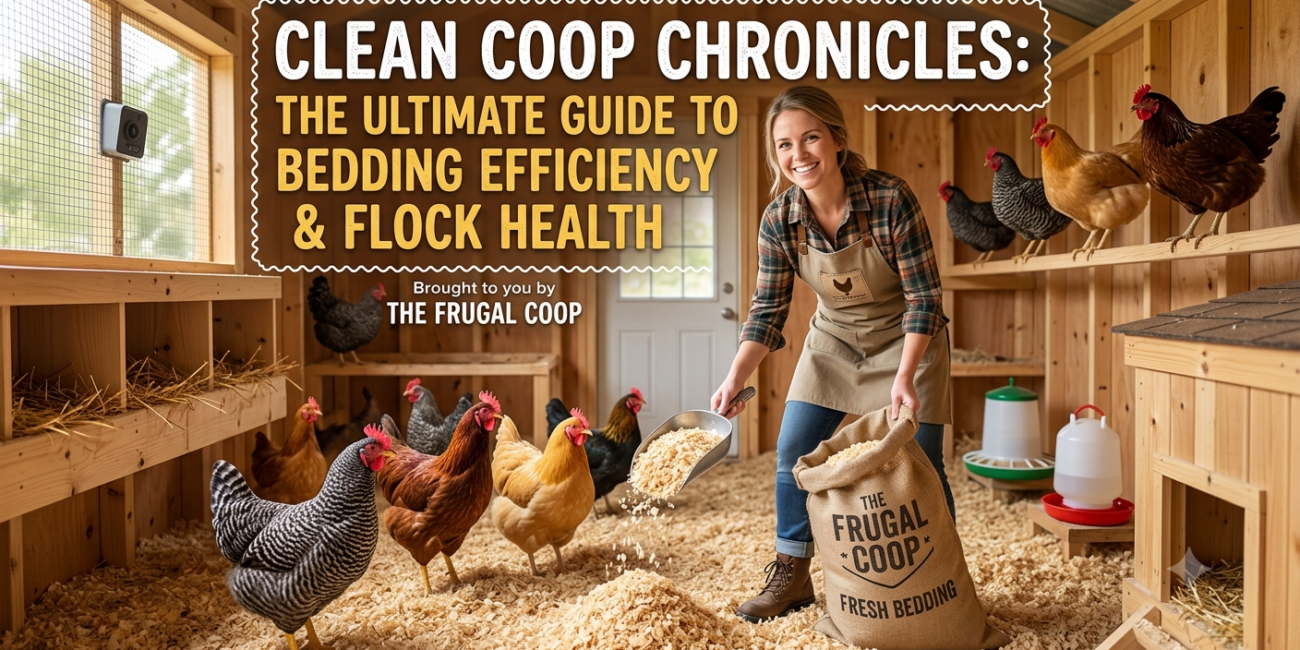
When you are designing a highly efficient backyard setup, it’s easy to spend all your time focusing on advanced tech like automatic doors or smart monitoring cameras. But one of the most critical factors impacting your daily routine and flock health is right under your hens’ feet: coop bedding.
Maintaining a clean coop isn’t just about aesthetics; it is the foundation of your flock’s respiratory health and a massive driver of everyday efficiency. The right material minimizes cleaning time, completely neutralizes odor, and snaps right into your backyard composting loop. The wrong material traps moisture, harbors bacteria, and turns your daily chores into a time-consuming headache.
To help you optimize your setup for maximum cleanliness and minimum effort, let’s look at the pros, cons, and essential Dos and Don’ts of six popular bedding options: pine shavings, construction sand, pellets, straw, recycled paper, and coffee grounds.
1. Pine Shavings (The Absorbent Standard)
Medium-to-large kiln-dried pine shavings are the most popular choice for backyard coops for a reason: they are accessible, highly affordable, and incredibly effective at managing moisture.
- The Cleanliness Factor: They absorb moisture rapidly, keeping dropping zones dry and locking away ammonia smells before they can irritate your birds.
- The Efficiency Boost: They work perfectly with low-effort management methods (like the deep litter method) and break down beautifully into nitrogen-rich compost for your vegetable garden.
DO: Buy kiln-dried medium-to-large shavings to ensure harmful natural oils are removed.
DON’T: Ever use cedar shavings. Cedar contains strong aromatic oils (plicatic acid) that are highly toxic to a chicken’s sensitive respiratory system.
2. Construction Sand (The “Litter Box” Method)
Using a thick layer of coarse construction sand in the coop and run is a favorite strategy for keepers who want a pristine, ultra-clean environment with minimal long-term maintenance.
- The Cleanliness Factor: Sand doesn’t absorb moisture—it dries out droppings almost instantly, which stops odor completely and prevents flies from breeding.
- The Efficiency Boost: Cleaning the coop becomes as quick and easy as scooping a cat’s litter box. A quick pass with a slotted scoop a few times a week keeps the coop immaculate, and the sand itself lasts for months or even years without needing a full replacement.
DO: Use coarse construction sand or all-purpose sand.
DON’T: Use fine play sand. Play sand is too fine and contains quartz silica dust, which your birds will inhale, leading to permanent respiratory damage.
3. Pine or Straw Pellets (The Compression Powerhouse)
Pelletized bedding (often sold as horse stall pellets or specialized poultry pellets) is made from highly compressed wood or straw fibers that expand when exposed to moisture.
- The Cleanliness Factor: Pellets are ultra-absorbent. When liquid hits them, they dissolve into a fine, fluffy, highly absorbent sawdust that binds tightly to moisture and neutralizes ammonia odors rapidly.
- The Efficiency Boost: Because they expand and absorb so much liquid, you use far less material over time. They create a very uniform, easy-to-sift floor layer that cuts down on the physical labor of full coop cleanouts.
DO: Lightly mist a brand-new layer of pellets with a hose to help them begin to break down and expand into a soft, safe walking texture for your hens.
DON’T: Leave pellets completely dry and hard if you have heavy, large-breed chickens, as navigating the hard nodules can occasionally lead to foot issues like bumblefoot.
4. Straw (The Traditional Insulator)
Agricultural straw (hollow stalks left over from harvested grain crops) is the quintessential, old-school farm bedding option.
- The Cleanliness Factor: While it doesn’t absorb moisture inside the stalk itself, the hollow design traps warm air, making it an incredible natural insulator during freezing weather.
- The Efficiency Boost: It is widely available and usually incredibly cheap by the bale. It adds fantastic structure to a compost pile, though it can get tangled in rake tines during cleanouts.
DO: Source clean, tightly bound, and completely dry bales from a trusted supplier.
DON’T: Use straw if your coop has poor ventilation. Because straw traps moisture rather than absorbing it, wet straw can rapidly breed dangerous Aspergillus mold spores, causing deadly respiratory infections in your flock.
5. Recycled Paper Shreds (The Frugal Temporary Base)
If you have a paper shredder at home or access to clean newsprint, using recycled paper seems like an incredibly resource-efficient choice.
- The Cleanliness Factor: It offers decent absorbency initially, but it struggles under heavy use. It mats down quickly when wet, creating a solid layer that traps moisture and ammonia.
- The Efficiency Boost: While it’s free and great for a zero-waste lifestyle, it requires much more frequent full changes compared to other materials, which can slow down your daily routine.
DO: Use it primarily as a short-term backup or a soft base layer in brooding boxes for young baby chicks.
DON’T: Use glossy magazines, colored flyers, or paper with heavy chemical inks, which can introduce unwanted toxins to your coop environment.
6. Recycled Coffee Grounds (The Odor Eliminator)
Using roasted, dried, and recycled coffee grounds (specifically the varieties commercially manufactured for poultry coops) is a modern trend focused entirely on premium odor control.
- The Cleanliness Factor: It boasts incredible natural odor control (your coop will smell like a local café), absorbs moisture rapidly, and naturally repels certain pests like mites and flies.
- The Efficiency Boost: Its high absorbency means the bedding stays usable longer, though its dark color can make it a bit trickier to spot early signs of abnormal droppings or pests during quick checks.
DO: Only use commercially manufactured, defatted and dried coffee bedding designed specifically for animals to ensure it is completely safe.
DON’T: Throw your wet, used morning coffee grounds directly from the kitchen into the coop. High levels of active caffeine are toxic to chickens if ingested, and wet grounds will quickly breed mold.
The Bedding Efficiency Cheat Sheet
| Bedding Type | Best For | Compost Friendly? | Cleaning Maintenance | Cost Tier |
| Pine Shavings | Deep Litter & Garden Prep | 🟢 Yes (Excellent) | Medium (Periodic full swaps) | 💰 Low |
| Coarse Sand | Instant Spot-Cleaning | 🔴 No | Low (Quick daily scooping) | 💰💰 Medium (Upfront) |
| Pellets | Maximum Absorbency | 🟢 Yes | Low (Turns to easily sifted dust) | 💰💰 Medium |
| Straw | Extreme Winter Insulation | 🟢 Yes | High (Prone to matting/heavy cleanouts) | 💰 Low |
| Recycled Paper | Brooder Boxes & Backups | 🟢 Yes | High (Frequent replacements) | 🆓 Free / Low |
| Coffee Grounds | Maximum Odor Control | 🟢 Yes | Medium (Long-lasting) | 💰💰💰 High |
Cultivating Global Self-Sufficiency
At The Frugal Coop, we believe that optimizing the health and efficiency of our backyards gives us the resources to look outward and drive positive change. That is why 5% of all our business commissions are donated directly to Heifer International, helping sustainable farming families build clean, resilient, and self-sufficient futures globally. 🌍❤️
How Do You Keep Your Coop Pristine?
Finding the perfect balance of cleanliness and daily efficiency is a continuous process of experimenting to see what fits your climate, coop design, and schedule.
What bedding material keeps your setup running smoothly? Have you made the switch to pellets or traditional straw, or are you sticking with classic sand or pine shavings? Let us know in the comments below! 👇