This post may contain affiliate links (Affiliate Disclosure). We may earn a commission from qualifying purchases.
If you’re a member of the Frugal Coop family, you know that keeping your flock cozy doesn’t have to mean a spike in your electric bill. In fact, many experienced homesteaders avoid heat lamps altogether due to fire risks and the “softening” of their birds’ natural winter hardiness.
But how do you protect your hens when the thermometer dips into the negatives? Today, we’re diving into the best low-cost, no-power methods on how to keep a chicken coop warm without electricity.
1. The “Deep Litter Method” (Nature’s Floor Heater)
Instead of cleaning out your coop every week, try the Deep Litter Method. By layering pine shavings and allowing organic matter to break down over the winter, the floor of your coop actually generates its own heat through composting.
-
The Frugal Win: You save money on bedding and end up with “black gold” compost for your spring garden.
-
Pro-Tip: Make sure you have adequate ventilation at the top of the coop to let moisture escape!
2. Block the Drafts, Not the Air
Chickens don’t die from the cold; they die from moisture and drafts. Check your coop for gaps at chicken-level and seal them with scrap plywood or even heavy cardboard.
Ventilation vs. Drafts: The Winter Survival Guide
Many new chicken owners make the mistake of sealing their coop airtight to “keep the warmth in.” Don’t do it! An airtight coop traps moisture from breath and manure, which leads to ammonia buildup and frostbite. The goal is Air Exchange, not Wind.
The “Quick Check” Comparison
| Feature | Ventilation (Good) | Drafts (Bad) |
| Location | High up, usually near the roofline/eaves. | Low down, at the level where chickens sleep or stand. |
| Direction | Vertical/Overhead: Air moves up and out. | Horizontal: Air blows directly across the birds. |
| Purpose | Removes moisture, ammonia, and CO2. | Sucks the body heat right out of the chicken. |
| The “Sniff” Test | Coop smells fresh; no condensation on walls. | Coop smells like a gym locker; chickens are shivering. |
3 Steps to “Draft-Proof” Your Ventilation
1. The Roost Line Rule
Draw an imaginary line 12 inches above your chickens’ heads while they are sitting on their roosting bars. All winter vents should be above this line. This allows the rising warm, moist air to escape without a cold breeze ever hitting the birds’ bodies.
2. The “Hand Test”
On a windy night, stick your hand inside the coop near the roosting bars.
-
If you feel a distinct “breeze” hitting your skin, that’s a draft. Seal the crack with caulk, scrap wood, or a heavy tarp.
-
If the air feels still but the coop doesn’t smell like ammonia, your ventilation is working.
- Frugal Coop Pro-Tip: If you see condensation on your coop windows in the morning, you need more ventilation. Open a vent or drill a few 1-inch holes near the roof peak. It’s better to have a slightly colder, dry coop than a “warm,” damp one!
3. Manage the “Pop Door”
The door chickens use to go in and out is a major source of drafts.
- The Frugal Hack: Hang a “chicken curtain” made of heavy clear plastic strips or burlap over the opening. It keeps the wind out but allows the girls to pass through freely.
3. The “Sun-Trap” Greenhouse Effect
If your run is covered, wrap the windward side with clear 6-mil plastic sheeting or clear tarps. This creates a greenhouse effect, trapping solar heat during the day and giving your chickens a warm, wind-free place to hang out.
[AFFILIATE LINK: Clear Tarp with Grommets]
-
Budget Tip: You can often find heavy-duty plastic at hardware stores for under $20, and it lasts multiple seasons.
4. High-Energy “Bedtime Snacks”
Did you know a chicken’s digestion acts like an internal furnace? Feeding your girls cracked corn or black oil sunflower seeds right before they roost gives their bodies fuel to burn throughout the night, keeping their core temperature up.
-
Frugal Deal: Buy corn in bulk at your local feed mill to save 40% over pet-store prices.
5. Protect the Combs with a less than $5 Fix
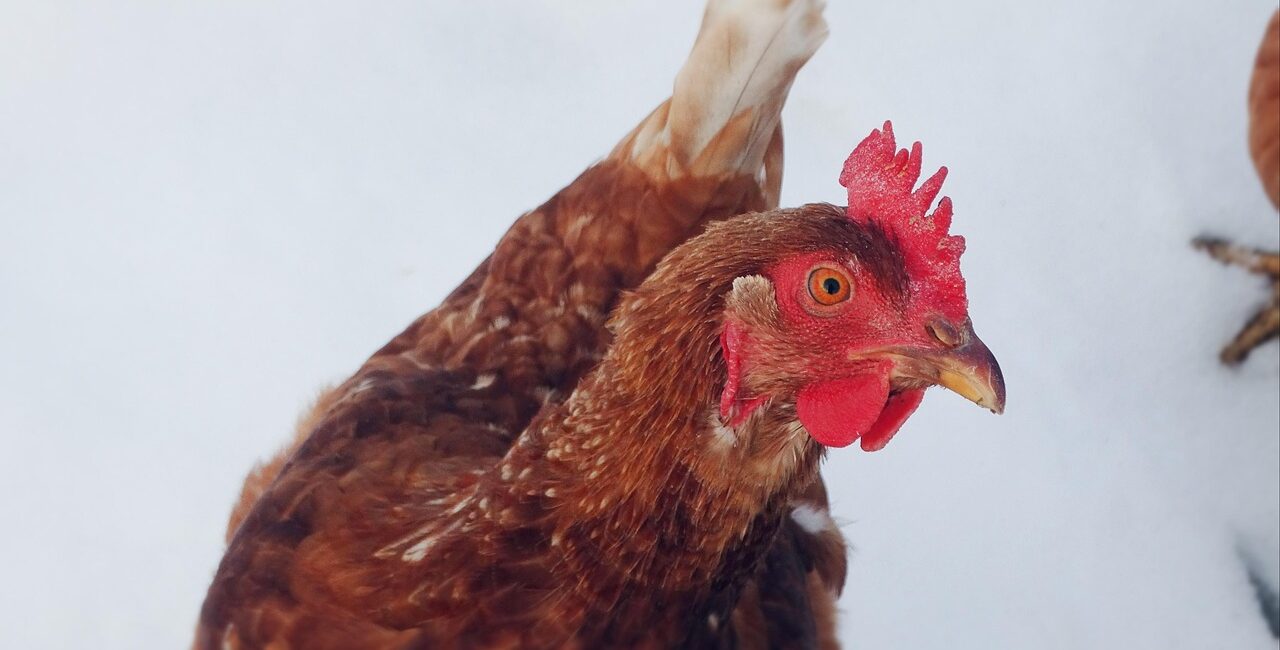
Frostbite on combs and wattles is a major concern in the winter. Before the next cold snap, apply a thin layer of coconut oil to their combs. This acts as a moisture barrier to prevent ice crystals from forming on the skin. [AFFILIATE LINK: Coconut Oil]
[Check out the Blog Post: The Deep Litter Method: How to Build a “Compost Heater” for Your Coop]