This post may contain affiliate links (Affiliate Disclosure). We may earn a commission from qualifying purchases.
When you walk out to the coop and find a clutch of warm eggs, you aren’t just looking at breakfast—you’re looking at a masterpiece of natural engineering. One of the most common questions for new keepers is how to handle that bounty once it leaves the nesting box. As an engineer, I love that fresh eggs come with their own built-in “sealant,” but knowing how to manage that barrier is the key to long-lasting freshness.
Here is the definitive guide to storing your eggs properly while maintaining the highest quality for your kitchen.
1. To Wash or Not to Wash? (The Bloom Factor)
The single most important thing to understand about fresh eggs is the bloom. This is a microscopic, protective coating the hen’s body applies to the shell just before the egg is laid.
- The Protective Seal: The bloom seals the thousands of tiny pores in the eggshell, preventing bacteria from entering and moisture from escaping.
- The “Counter-Top” Rule: If you leave the bloom intact, fresh eggs can safely sit on your kitchen counter for up to two weeks.
- The Permanent Choice: Once you wash an egg, the bloom is gone forever. If you wash them, they must go straight into the refrigerator to prevent spoilage.
2. Refrigeration: The Longevity Play
If you have a large flock and find yourself with an “egg backlog,” the fridge is your best friend.
- Extended Shelf Life: Refrigerated fresh eggs (especially those with the bloom intact) can stay high-quality for three months or even longer.
- Positioning Matters: Store eggs in a carton on an interior shelf rather than the door. The temperature on the door fluctuates every time you open the fridge, which can degrade the egg’s internal structure faster.
- Pointy Side Down: Always store eggs with the blunt end up. This keeps the internal air cell at the top, which helps prevent the yolk from settling against the shell and keeps the egg fresh longer.
3. The “Float Test” for Freshness
Not sure how long that egg has been sitting in the “to-be-sorted” basket? Use a little physics to find out.
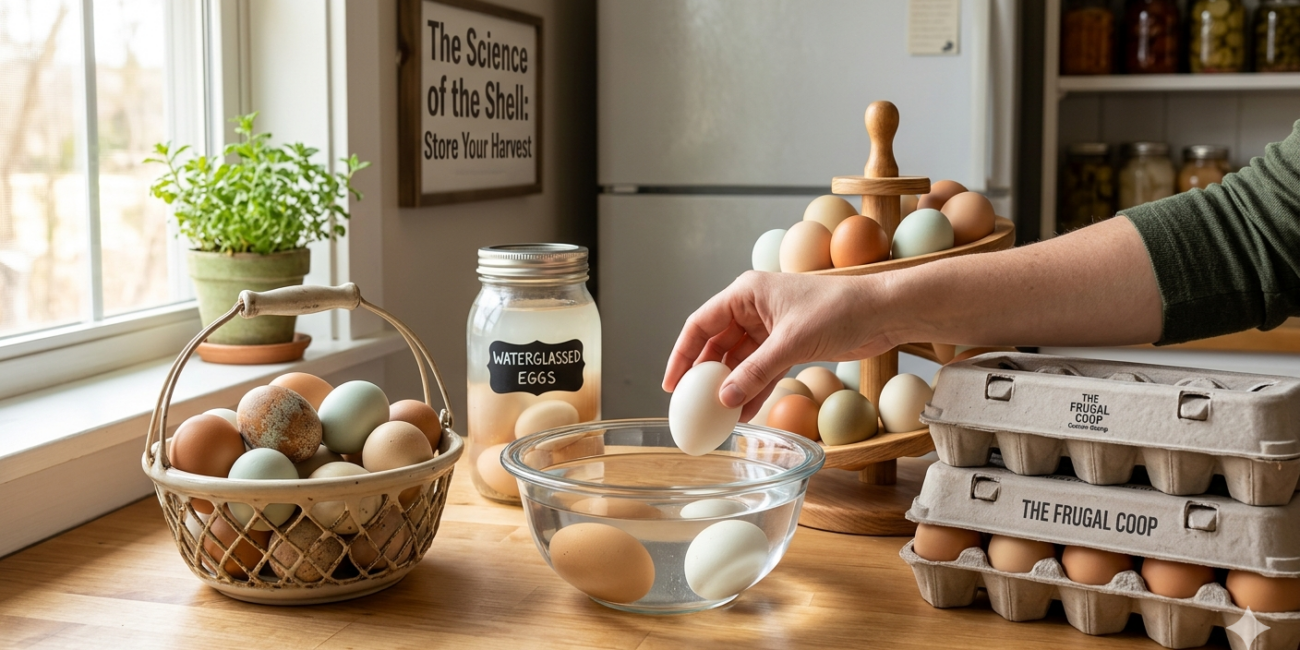
- The Method: Gently drop the egg into a bowl of water.
- The Result: A fresh egg will sink and lay flat on its side. An older egg will stand on one end. If it floats to the surface, the air cell has expanded too much, and the egg should be tossed in the compost.
4. Long-Term Preservation: Freezing
If your girls are outperforming your ability to eat omelets, you can freeze eggs for later use in baking or scrambles.
- Don’t Freeze in the Shell: The liquid will expand and crack the shell.
- The Frugal Method: Whisk the eggs together and pour them into a silicone muffin tin or ice cube tray. Once frozen, pop the “egg pucks” into a freezer bag for up to a year.
5. The “Time Capsule” Method: Waterglassing
For the ultimate lesson in long-term preservation, you can use a historical technique called waterglassing. This is the perfect solution for “future-proofing” your egg supply during the winter months when the girls might take a break from laying.
- The Mechanism: This process involves submerging clean, unwashed eggs in a solution of food-grade hydrated lime and filtered water.
- The Seal: The lime solution reacts with the calcium in the eggshell to create an airtight, permanent seal that prevents spoilage for 12 to 18 months.
- The Requirement: You must use fresh, unwashed eggs with the bloom completely intact. If the egg has been washed or is even slightly soiled, the process will not work and can lead to contamination.
- The Storage: Store your waterglassing crock or food-grade bucket in a cool, dark place like a basement or pantry.
Engineer’s Note: Before using a waterglassed egg, rinse it thoroughly to remove the lime solution. Keep in mind that the shells become slightly more fragile over time, so be gentle when cracking them!
Storing for a Greater Purpose
Managing a productive flock is a rewarding part of self-sufficient homesteading. At The Frugal Coop, we believe that efficiency at home can lead to change abroad. When you purchase your egg baskets, scales, or storage containers through our community, 5% of our commissions are donated to Heifer International.
By mastering the art of egg storage, you’re reducing waste in your own kitchen while helping families worldwide gain access to sustainable protein and the training needed to thrive.
How do you prefer to display your harvest? Are you a “countertop basket” person or a “color-coordinated carton” enthusiast? Let us know in the comments!