As the winter ice thaws and we “spring forward” into warmer days, the homestead is a busy place. But while we are focusing on coop cleaning and garden prep, something else is moving above us: millions of wild birds are beginning their annual migration.
While beautiful to watch, migration season is the highest-risk time of year for your backyard chickens. Wild ducks, geese, and songbirds are natural carriers of diseases, most notably Highly Pathogenic Avian Influenza (HPAI), or bird flu.
This devastating virus can sweep through a flock in hours, and for small-scale keepers, it is often catastrophic. Prevention is truly your only defense. Here is your essential guide to tightening your biosecurity this spring to keep your birds safe.
1. Understand the Threat: It’s in the Droppings
Wild birds shed HPAI and other pathogens primarily through their feces, saliva, and nasal secretions. Because migrating birds stop frequently in fields, yards, and ponds to rest and feed, they contaminate everything they touch.
Your chickens don’t need to meet a wild bird face-to-face to get sick. The real danger is “fomites”—objects/surfaces that can be contaminated (including you!) that physically carry the virus into your coop.
The Golden Rule: If you assume everything outside your protected chicken run is contaminated, your biosecurity measures will be stronger.
2. Implement a “Coop Shoe” Policy
The single most common way bird flu enters a backyard flock is on the bottom of a boot. Remember how we all were extra careful during the COVID lockdown to not bring the virus into our home, the same goes for bird flu this time of year. If you walked through your yard, your field, or near a local pond, you could be carrying invisible, viral-laden droppings right into your run from the bottoms of your shoes.
-
The Fix: Have a dedicated pair of “coop shoes” or rubber boots that never leave the protected chicken area. Change into them right at the gate. [AFFILIATE LINK – Men’s coop boots] [AFFILITATE LINK – Women’s coop boots]
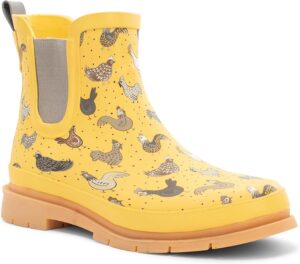 [AFFILIATE LINK – Chicken Boots]
-
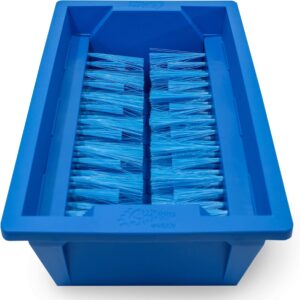
The Frugal Hack: If you can’t afford dedicated boots, set up a foot bath (a shallow tray with a bleach/water solution) at the entrance of the run. Step in it and scrub your soles before entering. [AFFILIATE LINK – Shoe/Boot Scrubber]
3. Stop the Co-Mingling
We love seeing our chickens free-range, especially in the spring. However, during peak migration, the risk is too high. Your chickens should be confined to a completely enclosed, protected run.
-
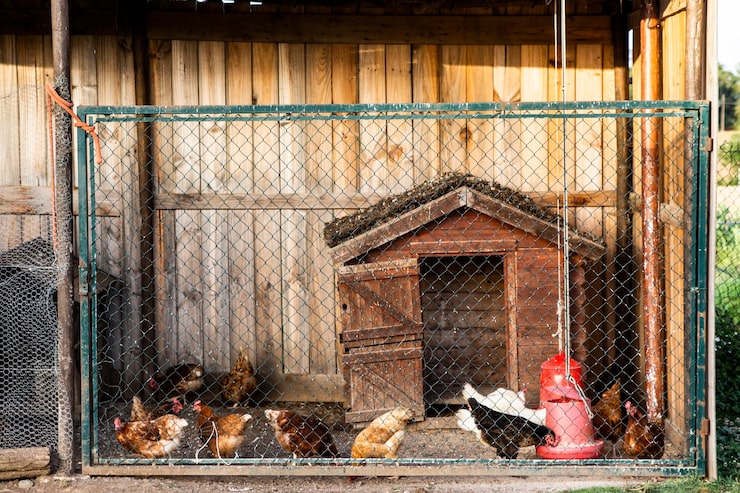
Physical Barriers: Wild birds must be kept out. Ensure your run is enclosed with 1/2 inch hardware cloth, which is small enough to stop sparrows and other songbirds that might try to steal feed.
-
Overhead Protection: A physical roof or tarp on your run is best. It stops wild bird droppings from landing inside your chickens’ living space. If a solid roof isn’t possible, poultry netting can at least prevent larger waterfowl from landing. [AFFILIATE LINK – Tarp]
4. Secure Your Feed and Water
Wild birds are attracted to two things: an easy meal and a place to drink. If your feeders and waterers are out in the open, you are inviting contaminated visitors.
-
Feeders “Inside”: Always keep feeders inside the coop or the covered run.
-
Zero Spillage: Frugal keepers know that spilled feed is wasted money. But during migration, it’s also a biohazard. Clean up spills immediately.
-
Covered Waterers: Use a waterer with a cover to prevent wild birds from drinking (or defecating) in your flock’s water supply.
5. Monitor and Lockdown New Arrivals
Spring is the time for adding new birds, but remember: every new addition is a potential vector.
-
The 30-Day Quarantine: Never introduce new adult birds directly to your existing flock. Keep them in a separate “quarantine coop” at least 30 feet (preferably more) away from your main coop for a minimum of 30 days.
-
Watch for Illness: During this time, observe them closely for respiratory distress, lethargy, diarrhea, or decreased egg production. If they remain healthy, they can then be introduced.
Protecting your flock requires diligence, but these simple habits are your best defense against a season that can be as dangerous as it is beautiful. Tighten up your biosecurity today to ensure your flock is safe all spring long!